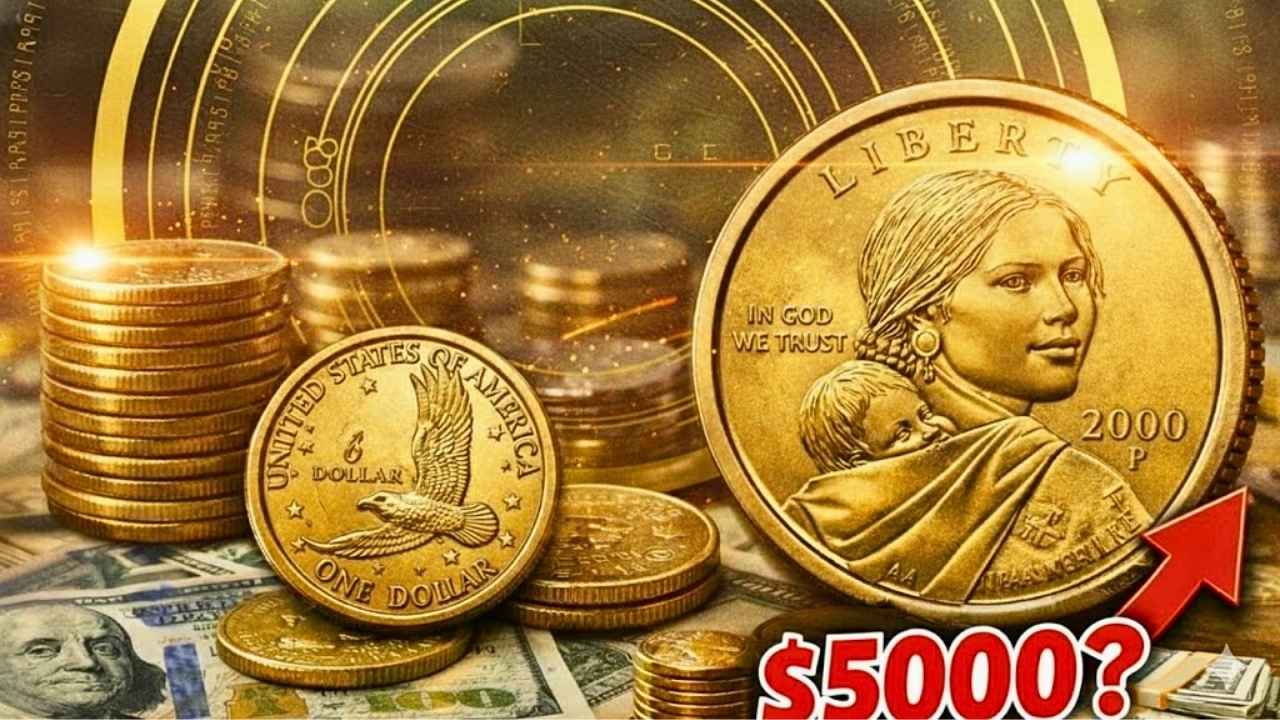
The Sacagawea Dollar, first introduced in 2000, remains one of the most distinctive coins in modern U.S. history. Featuring Sacagawea carrying her infant son, Jean Baptiste, the coin was designed to honor her role in the Lewis and Clark expedition. While most Sacagawea Dollars are worth only face value, certain rare varieties and minting errors have become highly valuable. In fact, one extraordinary Sacagawea Dollar has been valued at more than $2.1 million, making it a true treasure in the world of numismatics. This guide explores the coin’s history, design, and the rare examples that collectors dream of finding.
Historical Background
The Sacagawea Dollar was created to replace the Susan B. Anthony Dollar, which had been unpopular due to its similarity in size and color to the quarter. The new coin was struck in a golden hue, using a manganese‑brass alloy, to make it more distinctive. The obverse design by Glenna Goodacre depicts Sacagawea with her child, while the reverse originally featured a soaring eagle.
Over the years, the coin has seen several reverse design changes, particularly with the Native American $1 Coin Program, which introduced new designs annually beginning in 2009. Despite these changes, the coin has never gained widespread use in everyday commerce, but it has become a favorite among collectors.
Mint Marks and Production
Sacagawea Dollars were produced at multiple mints:
- Philadelphia (P)
- Denver (D)
- San Francisco (S)
Philadelphia and Denver coins were struck for circulation, while San Francisco produced proof versions for collectors. Proof coins are generally more valuable due to their sharp details and mirror‑like finish. Special issues, such as presentation coins and experimental strikes, are especially prized.
The $2.1 Million Rarity
The most famous and valuable Sacagawea Dollar is the so‑called “Cheerios Dollar.” In 1999, the U.S. Mint placed 5,500 specially struck Sacagawea Dollars into Cheerios cereal boxes as part of a promotional campaign. These coins were intended to introduce the new dollar to the public before its official release.
What makes the Cheerios Dollar unique is its reverse design. Unlike the standard eagle reverse, the Cheerios Dollar features enhanced tail feather details. This subtle difference was not widely known until years later, when collectors realized its rarity. Today, authenticated Cheerios Dollars can sell for tens of thousands of dollars, and one specimen has been valued at more than $2.1 million, making it one of the most valuable modern coins in existence.
Other Rare Varieties and Errors
Beyond the Cheerios Dollar, several other Sacagawea Dollar varieties and errors are highly collectible:
- Mule Errors: Coins struck with mismatched obverse and reverse dies, such as a Sacagawea Dollar paired with a Washington Quarter reverse.
- Proof Errors: Mistakes in proof coins, including double strikes or misaligned dies.
- Experimental Strikes: Coins produced with different alloys or finishes during testing phases.
These rarities highlight the importance of careful inspection and authentication when collecting Sacagawea Dollars.
Value by Condition
Condition plays a major role in determining the value of Sacagawea Dollars. Most circulation strikes are worth only face value, but uncirculated and proof coins can command higher prices.
- Circulated coins: Typically worth $1.
- Uncirculated coins: Range from $2 to $10 depending on grade.
- Proof coins: Usually valued between $5 and $20.
- Cheerios Dollar: Tens of thousands to millions depending on grade and provenance.
- Mule errors: Often sell for thousands of dollars.
Professional grading services such as PCGS and NGC provide certification, which adds credibility and ensures accurate valuation.
Collecting Tips
For those interested in collecting Sacagawea Dollars, here are some practical tips:
- Inspect coins carefully for unusual features or errors.
- Learn to recognize the enhanced tail feathers of the Cheerios Dollar.
- Consider professional grading for rare or high‑value coins.
- Store coins in protective holders to prevent damage.
- Explore proof sets and special issues for unique varieties.
Building a collection of Sacagawea Dollars can be both affordable and rewarding, with the potential for discovering hidden treasures.
Market Trends
The market for Sacagawea Dollars remains steady, with common coins trading at modest premiums and rare varieties commanding strong prices. The Cheerios Dollar continues to attract attention due to its rarity and historical significance. As more collectors become aware of these coins, demand is likely to remain strong, ensuring that values stay high for the rarest examples.
Key Highlights
- The Sacagawea Dollar was introduced in 2000 to replace the Susan B. Anthony Dollar.
- Philadelphia, Denver, and San Francisco mints produced circulation and proof coins.
- The Cheerios Dollar, with enhanced tail feathers, is valued at more than $2.1 million.
- Mule errors and proof mistakes add to the coin’s rarity and value.
- Condition and professional grading are essential for accurate valuation.
Final Words
The Sacagawea Dollar is a fascinating coin that combines history, artistry, and the thrill of discovery. While most examples are worth only face value, rare varieties such as the Cheerios Dollar have achieved legendary status, with values reaching millions. For collectors, the Sacagawea Dollar offers both accessibility and the potential for extraordinary finds. Whether you are just beginning your numismatic journey or searching for rare treasures, this coin reminds us that even modern issues can hold incredible value.