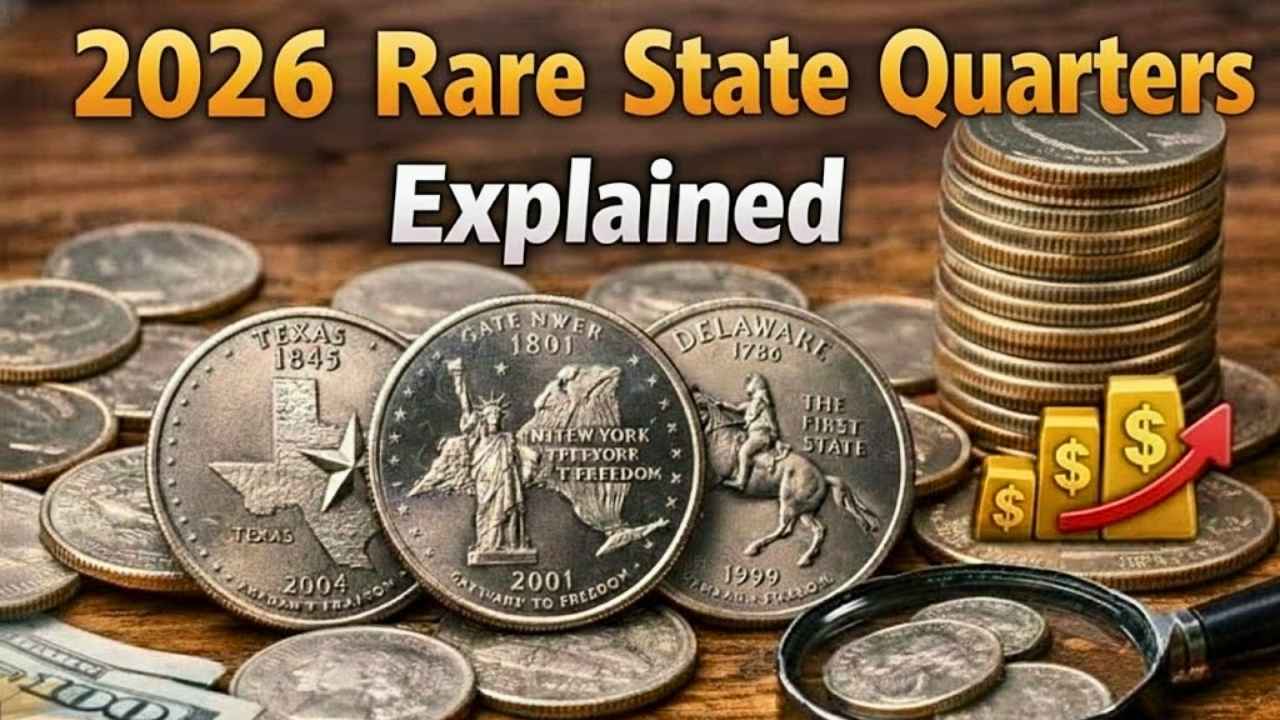
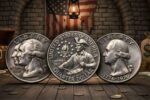
The U.S. Mint’s State Quarters Program, launched in 1999 and completed in 2008, transformed everyday pocket change into a nationwide collecting phenomenon. Millions of Americans began saving quarters from each state, sparking one of the most successful modern coin programs. While most of these coins remain common and worth only their face value, certain rare varieties and minting errors have become highly valuable. In 2026, collectors continue to search for these hidden treasures, with some state quarters worth thousands of dollars. This guide explores the history, identification, and current market trends for rare state quarters.
The State Quarters Program
The program was designed to honor all 50 states with unique reverse designs, released in batches over nearly a decade. Each coin featured George Washington’s portrait on the obverse and a state-specific design on the reverse. The initiative not only encouraged coin collecting but also educated the public about state history and culture. By the time the program ended in 2008, billions of quarters had been minted, but only a small fraction contained rare varieties or errors that make them valuable today.
Why Most State Quarters Are Common
Despite their popularity, most state quarters were produced in massive quantities. Circulated examples are generally worth only 25 cents, and even uncirculated coins often sell for modest premiums. The true value lies in rare varieties, minting errors, and coins preserved in exceptional condition. Collectors in 2026 focus on these rarities, which can command prices far beyond their face value.
Rare State Quarters Worth Thousands
2004 Wisconsin Extra Leaf Quarter
This coin features an extra leaf on the ear of corn in the design. Two varieties exist: the “extra high leaf” and “extra low leaf.” Both are rare and can be worth hundreds or even thousands depending on condition.
1999 Delaware Spitting Horse Quarter
A die crack on the reverse creates the appearance of a horse spitting. This error variety is highly collectible and can fetch strong premiums.
2005 Kansas “In God We Rust” Quarter
A weak strike on the “T” in “Trust” results in the phrase “In God We Rust.” This error coin is popular among collectors and worth far more than face value.

2009 District of Columbia Duke Ellington Quarter
Some examples were struck without the “D” mint mark, creating a rare variety that collectors prize.
High-Grade State Quarters
Even common issues can be valuable if preserved in pristine, uncirculated condition. Coins graded MS67 or higher by professional services can sell for hundreds or more.
Chart: Rare State Quarters Values in 2026
| Coin Type | Feature | Estimated Value (USD) |
|---|---|---|
| 2004 Wisconsin Extra Leaf | Extra High/Low Leaf | $500 – $5,000+ |
| 1999 Delaware Spitting Horse | Die Crack Error | $100 – $500+ |
| 2005 Kansas “In God We Rust” | Weak Strike Error | $50 – $300+ |
| 2009 D.C. Duke Ellington | Missing Mint Mark | $500 – $1,500+ |
| High-Grade State Quarters | MS67+ Condition | $200 – $1,000+ |
How to Spot Valuable State Quarters
Collectors should carefully examine their coins under magnification. Look for unusual features such as extra details, missing letters, or die cracks. Mint marks are crucial, as certain varieties are defined by their presence or absence. Coins with sharp details and original luster are especially valuable. Professional grading and authentication are essential to confirm rarity and maximize value.
Collecting Trends in 2026
In 2026, the market for state quarters has matured. Auction houses report steady demand for rare varieties, and online platforms have made it easier for collectors to buy and sell coins. Social media has fueled interest among younger collectors, while seasoned numismatists continue to prize rare errors. The combination of nostalgia, artistry, and rarity ensures state quarters remain popular across generations.
Tips for Collectors
- Study reference guides to learn about key varieties and errors
- Examine coins carefully for unusual features or minting anomalies
- Consider professional grading to authenticate and preserve rare coins
- Store coins properly to prevent tarnish and damage
- Follow auction trends to understand current market demand
Key Highlights
- The State Quarters Program ran from 1999 to 2008, inspiring millions of collectors
- Most state quarters remain common and worth only face value
- Rare varieties include the 2004 Wisconsin extra leaf, 1999 Delaware spitting horse, and 2005 Kansas “In God We Rust” quarter
- Values in 2026 range from $50 to $5,000+ depending on rarity and condition
- Collectors continue to prize these coins for their history, uniqueness, and hidden value
Final Words
The State Quarters Program may have ended nearly two decades ago, but its impact on coin collecting remains strong. Rare varieties and minting errors continue to command impressive premiums in 2026, proving that even ordinary pocket change can hold extraordinary value. Whether you are a seasoned collector or a curious beginner, searching for these treasures offers both excitement and the possibility of hidden fortune. That quarter tucked away in a collection—or even found in everyday change—might just be worth thousands today.