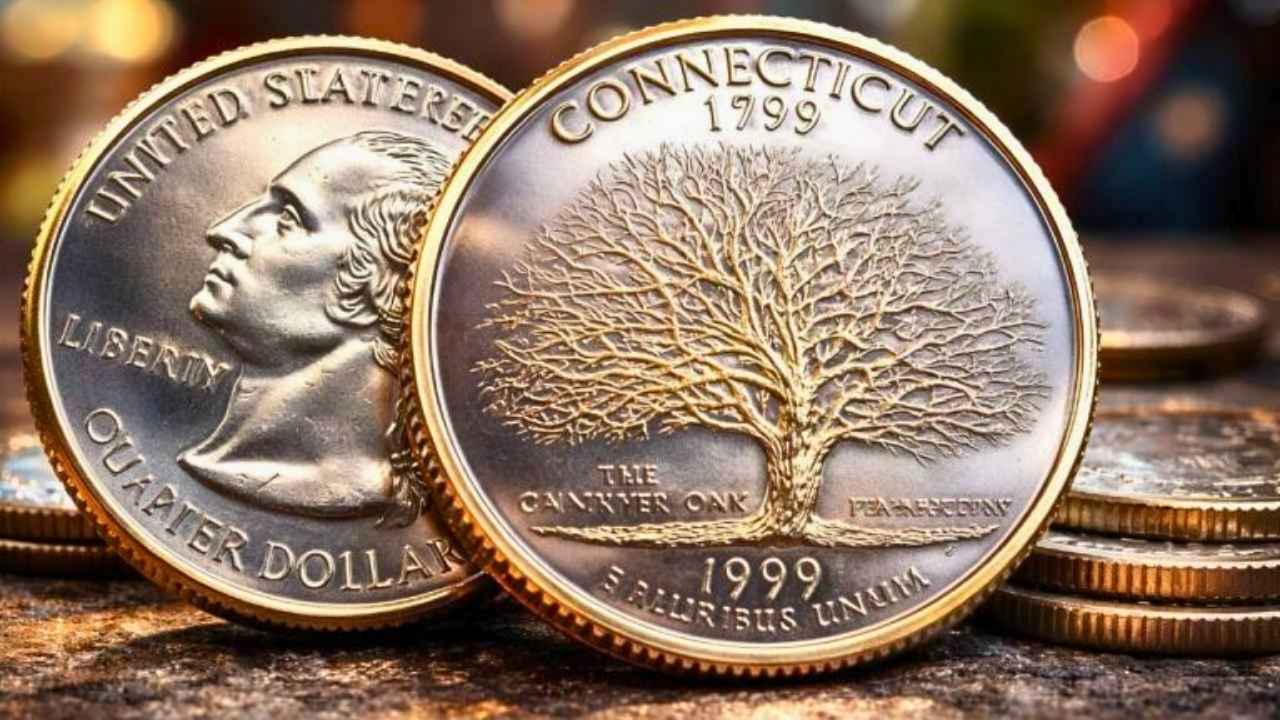
The 1999‑P Connecticut Quarter is part of the popular 50 State Quarters program launched by the U.S. Mint. Featuring the Charter Oak on its reverse, this coin celebrates Connecticut’s rich history and quickly became a favorite among collectors. While most examples are worth only face value, certain rare errors and high‑grade specimens have been known to sell for thousands of dollars. This guide explores the history, design, minting details, and the rare errors that make some 1999‑P Connecticut Quarters worth more than $4,000.
Historical Background
The 50 State Quarters program began in 1999, with Connecticut being one of the first five states honored. The reverse design depicts the legendary Charter Oak, a symbol of American independence and resilience. The obverse retains the familiar portrait of George Washington.
The Philadelphia Mint produced millions of Connecticut Quarters in 1999, making them common in circulation. However, the sheer volume of coins also led to occasional minting errors, which are now highly prized by collectors.
Mint Marks and Production
The 1999 Connecticut Quarter was struck at three mints:
- Philadelphia (P)
- Denver (D)
- San Francisco (S)
The Philadelphia issues are the most widely collected, especially when errors are involved. Denver coins are also common, while San Francisco produced proof versions for collectors. Proof coins, with their mirror‑like finish, are generally more valuable than circulation strikes, particularly in pristine condition.
Rare Errors Worth Thousands
Error coins are the highlight of the 1999‑P Connecticut Quarter series. These mistakes occurred during production and created unique variations that collectors are willing to pay a premium for. Some of the most notable errors include:
- Double Die Obverse: Doubling in the lettering or date can make a coin worth hundreds or even thousands.
- Off‑Center Strikes: Coins struck off‑center show part of the design missing, with values depending on the degree of error.
- Clipped Planchets: A coin missing a section due to a miscut planchet is rare and collectible.
- Struck on Wrong Planchet: Occasionally, a quarter was struck on a planchet meant for another denomination, creating a dramatic error.
High‑grade error coins certified by professional grading services have sold for more than $4,000, making them some of the most valuable modern quarters.
Value by Condition
Condition plays a crucial role in determining the value of any coin. For the 1999‑P Connecticut Quarter, values can be summarized as follows:
- Circulated coins: Typically worth face value unless an error is present.
- Uncirculated coins: Can range from $1 to $10 depending on grade.
- Proof coins: Usually valued between $5 and $20, with deep cameo examples fetching more.
- Error coins: Depending on rarity and severity, values can range from $50 to over $4,000.
Collectors prize coins with sharp details, original luster, and minimal wear. Reducing contact marks and scratches significantly increases value.
Collecting Tips
For those interested in collecting 1999‑P Connecticut Quarters, here are some practical tips:
- Inspect coins carefully for doubling, off‑center strikes, or unusual features.
- Use a magnifying glass to spot subtle errors.
- Consider professional grading for rare or high‑value coins.
- Store coins in protective holders to prevent damage.
- Build a complete set of State Quarters to enhance overall collection value.
Patience and attention to detail are essential when searching for valuable coins among common circulation strikes.
Market Trends
The market for State Quarters remains strong due to their popularity and accessibility. While most coins are inexpensive, rare errors continue to attract significant attention from collectors and investors. Online auctions and coin shows often feature Connecticut Quarters with dramatic errors, and prices can fluctuate depending on demand. As more collectors seek out these rarities, values are likely to remain stable or increase over time.
Key Highlights
- The 1999‑P Connecticut Quarter features the Charter Oak design.
- Philadelphia, Denver, and San Francisco mints produced millions of coins.
- Rare errors such as double dies, off‑center strikes, and wrong planchets can be worth thousands.
- Condition and professional grading play a major role in determining value.
- Error coins certified in high grades have sold for more than $4,000.
Final Words
The 1999‑P Connecticut Quarter is a fascinating piece of modern U.S. coinage. While most examples are common and worth only face value, rare errors and high‑grade specimens can transform an ordinary coin into a valuable treasure. For collectors, this quarter represents both history and opportunity. Whether you are searching through pocket change or building a professional collection, the Connecticut Quarter offers the chance to discover hidden value and perhaps even a coin worth thousands.